
Blockchain Development Services for Real Estate Companies
SpaceDev builds blockchain solutions for real estate firms, proptech platforms, and investment vehicles that need more than a pilot. We cover the full stack, from smart contract architecture to investor-facing platforms, with a delivery model built around your business constraints.
Or subscribe to our newsletter
Blockchain Use Cases We Build for the Real Estate Industry
The real estate sector has specific operational problems that blockchain solves at the infrastructure level. These are the use cases we deliver in production.
| Use Case | What It Solves |
|---|---|
| Property tokenization platforms | Fractional ownership, digital issuance, secondary market access |
| Smart contract-based transactions | Automated closings, escrow logic, title transfer without intermediaries |
| On-chain property registries | Tamper-proof title records, ownership history, dispute reduction |
| Tokenized debt and mortgage positions | Private credit instruments, bridge financing on-chain |
| KYC/AML and compliance infrastructure | Accreditation checks, transfer restrictions enforced at contract level |
| Investor portals and cap table management | Real-time ownership dashboards, distribution automation |
| DeFi integration for real estate | Liquidity pools, yield mechanisms, protocol-level lending |
Property tokenization platforms
Fractional ownership, digital issuance, secondary market access
Smart contract-based transactions
Automated closings, escrow logic, title transfer without intermediaries
On-chain property registries
Tamper-proof title records, ownership history, dispute reduction
Tokenized debt and mortgage positions
Private credit instruments, bridge financing on-chain
KYC/AML and compliance infrastructure
Accreditation checks, transfer restrictions enforced at contract level
Investor portals and cap table management
Real-time ownership dashboards, distribution automation
DeFi integration for real estate
Liquidity pools, yield mechanisms, protocol-level lending
Already know you need a tokenization platform specifically? See our dedicated Real Estate Tokenization service.
What Blockchain Brings to Real Estate Operations
Transparent Title Management and Ownership Records
On-chain property registries eliminate disputes over ownership history. Every transfer is recorded, timestamped, and auditable without relying on a central authority.
Smart Contracts That Replace Intermediaries in Property Transactions
Escrow, title transfer, rental agreements, and closing conditions can be codified in audited smart contracts that execute automatically when predefined conditions are met, cutting legal overhead and settlement time.
Fractional Investment and Liquidity for Illiquid Assets
Real estate has historically been inaccessible to smaller investors. Property tokenization opens fractional ownership, secondary trading, and global investor access for assets that were previously locked to high-net-worth participants.
Automated Compliance at the Contract Level
Accreditation checks, jurisdictional transfer restrictions, and investor allowlists enforced directly in the smart contract, not as a front-end suggestion that can be bypassed.
Blockchain Technologies We Use for Real Estate Platforms
Token Standards
ERC-1400, ERC-3643 (T-REX), ERC-20, ERC-721
Networks
Ethereum, Polygon, Avalanche, Private / Permissioned Chains
Smart Contract Infrastructure
Solidity, Hardhat, Foundry, OpenZeppelin
Compliance and Identity
Chainlink, on-chain KYC integrations, allowlist enforcement engines
Payment Rails
Stablecoin settlement (USDC, USDT), fiat on-ramp integrations, custodial wallet support
How We Deliver Real Estate Blockchain Projects
01
Discovery Sprint
We define the platform scope, token model, compliance requirements, and architecture before a single line of code is written. Our Product Discovery process gives your legal, operations, and investment teams a blueprint they can approve.
02
Build and QA
Milestone-based delivery with working demos, QA gates, and embedded security review at each stage. No monolith delivered at the end of a six-month engagement.
03
Launch and Post-Production
Ongoing engineering, monitoring, and iteration as your platform scales and regulatory requirements evolve.
Related Blockchain Services for Real Estate Platforms
Smart Contract Development
The on-chain layer governing token behavior and transaction logic
dApp Development
Investor portals, issuer consoles, and property dashboards
Real Estate Tokenization
Fractional ownership platforms and security token issuance
BlockAudit: Blockchain Security
Smart contract audits before any platform goes live
Asset Tokenization
Tokenization beyond real estate across asset classes
Real Work, Real Results
Explore our portfolio to see the engineering behind the platforms we've shipped.
Frequently Asked Questions
What blockchain services do real estate companies typically need?
Is blockchain legally compliant for real estate transactions?
What is the difference between a tokenized real estate platform and a property registry on blockchain?
How long does it take to build a blockchain platform for real estate?
From Our Blog
Related Reading
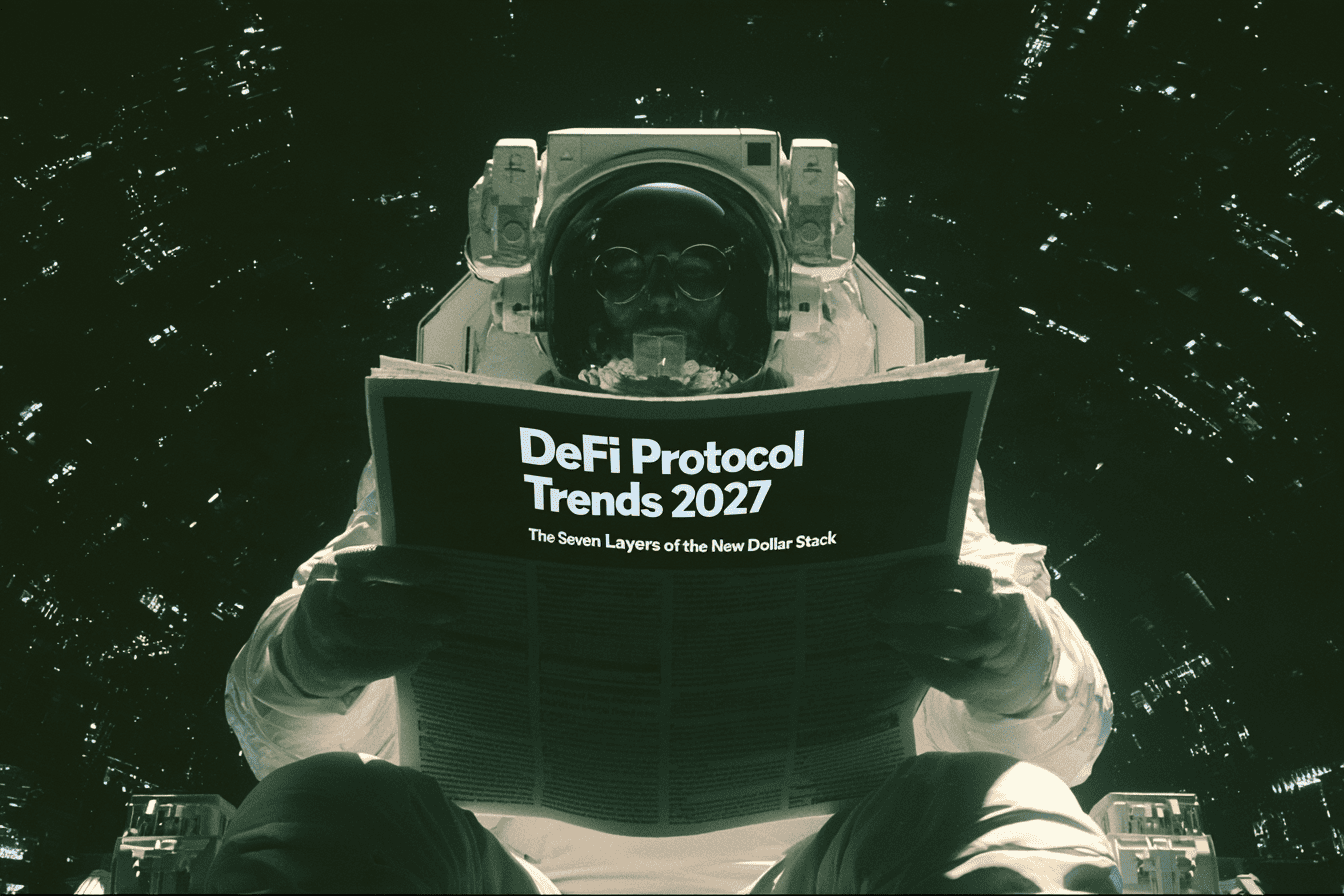
DeFi Protocol Trends 2027: The Seven Layers of the New Dollar Stack
DeFi protocols stopped being governance tokens and became businesses with revenue, while the stack broke into specialised layers. A layer-by-layer analysis of Sky, Aave, Frax, Ethena, M0, Perena and Axal heading into 2027.

Blockchain in Energy: Which Use Cases Are Real, and Which Are Hype
Blockchain energy use cases in 2026, sorted by maturity: proven in REC and carbon credit tokenization, still early for P2P trading and grid settlement.

Tokenized Bonds: How On-Chain Fixed Income Actually Works
How on-chain fixed income actually works: tokenized bonds, T+0 settlement, automated coupons, and where the 2026 US regulatory picture stands.
Build Your Real Estate Blockchain Platform with SpaceDev
SpaceDev brings blockchain development expertise for real estate companies that need production-grade systems, not demos. From architecture to launch, we are with you at every step.