

DeFi removed the intermediary from financial markets. What it replaced it with is a system of smart contracts, mathematical formulas, and economic incentives that need to be understood on their own terms, not through analogies to traditional finance.
Liquidity pools and yield farming are the infrastructure layer that made decentralized trading and lending possible at scale. They are also where most participants lose money without understanding why. (For the broader picture of how contracts move value in these systems, see The Role of Smart Contracts in DeFi.)
How Liquidity Pools Work
A liquidity pool is a smart contract holding two (or more) tokens, funded by users who deposit assets in exchange for a share of trading fees. When someone wants to swap Token A for Token B on a decentralized exchange, they are not trading against another user placing an order. They are trading against the pool.
The price at any given moment is determined by the ratio of tokens in the pool, not by an order book. The most common formula is the constant product model (x*y=k), where the product of the two token quantities remains constant before and after any trade. If a pool contains 100 ETH and 200,000 USDC, the product k equals 20,000,000. A trade that removes ETH from the pool must add enough USDC to maintain that constant, which is how the AMM prices the swap without a human market maker.
This mechanism has one important implication: as trades move the ratio further from equilibrium, the price impact per unit grows. Large trades against shallow pools produce significant slippage. That is why liquidity depth matters operationally, not just as a vanity metric.
LP Tokens and Pool Shares
When you deposit into a pool, you receive LP tokens representing your proportional share of the total liquidity. Someone depositing $1,000 each of ETH and USDC in Uniswap gains LP tokens denoting their share, which can increase in value if trading fees accumulate. Those LP tokens can be redeemed at any time for the underlying assets plus accrued fees, or staked in other protocols to earn additional rewards, which is where yield farming begins.
Impermanent Loss: The Risk the Dashboard Doesn’t Show
Impermanent loss is the single most misunderstood concept in liquidity provision. It doesn’t appear in the APY figure displayed on most interfaces, and it only becomes fully visible when you go to withdraw.
Impermanent loss happens when you provide liquidity to an AMM and the price ratio between your deposited tokens changes. The AMM sells the appreciating asset and buys the depreciating one to maintain balance, which means you end up holding less of the token that increased in value and more of the token that decreased. The difference between your pool value and what you would have if you had simply held both tokens in a wallet is the impermanent loss.
The math produces concrete figures:
| Price change (one token vs the other) | Impermanent loss vs holding |
|---|---|
| 25% | ~0.6% |
| 50% | ~2.0% |
| 100% (2x) | ~5.7% |
| 200% (3x) | ~13.4% |
| 400% (5x) | ~25.5% |
A 2x price move produces 5.7% loss versus simply holding the tokens. Impermanent loss becomes permanent upon withdrawal: if prices return to their original ratio before you exit, the loss disappears; if you exit while the ratio is diverged, it locks in.
The term “impermanent” is technically accurate but practically misleading. Most LPs in volatile pools experience the divergence without waiting for a reversion that may never come.
When Fees Offset the Loss
Trading fees accumulate continuously as users swap through a pool, and a pool earning 50% APY from fees generates approximately 4.2% monthly returns. If that pool experiences 5% impermanent loss, the fees compensate within about five to six weeks of providing liquidity. High-volume pools on major DEXs can make the economics work. Low-volume pools with volatile pairs typically cannot.
The practical calculation before entering any LP position is: expected annual fee revenue minus expected impermanent loss given realistic price scenarios. Most retail LPs skip the second part of that equation.
Concentrated Liquidity: From Uniswap v3 to v4
Uniswap v3 introduced concentrated liquidity, letting LPs deploy capital within a chosen price range instead of spreading it from zero to infinity. Focusing capital between $1,800 and $2,200 for ETH/USDC earns fees at a much higher rate while the price stays in range. The trade-off: out-of-range positions earn zero fees and amplify impermanent loss, so capital efficiency and IL risk rise together.
Uniswap v4 keeps that model, the math is unchanged, but wraps it in hooks: external smart contracts that run at set points in a pool’s lifecycle. This turns a fixed-function AMM into a programmable one, with three practical gains for LPs: automated rebalancing and auto-compounding on-chain, dynamic fees that adjust to volatility instead of fixed tiers, and custom liquidity curves matched to the asset pair.
| Aspect | Uniswap v3 | Uniswap v4 |
|---|---|---|
| Rebalancing | Manual, off-chain, gas-heavy | Automatable via hooks |
| Fees | Fixed tiers (0.05% / 0.30% / 1.00%) | Dynamic, per pool |
| Architecture | One contract per pool | Single PoolManager (singleton) |
| Main LP risk | Out-of-range IL | Out-of-range IL plus hook trust |
For teams building DeFi products, the effort shifts rather than disappears. Rebalancing logic can now live inside a hook, but that hook becomes part of the protocol’s attack surface, capable of skimming swaps, blocking withdrawals, or reopening reentrancy risks. Shipping a v4 hook should treat a smart contract audit as a launch requirement, not an optional step.
Why Deep Liquidity Matters for Protocol Stability
The depth of liquidity in a DeFi protocol is not just a metric that looks good on DeFiLlama. It has direct operational consequences.
Slippage control. Shallow pools produce high slippage on meaningful trade sizes, which drives users to other venues. For a DEX, this is a death spiral: less liquidity means worse execution, which means less volume, which means less fee revenue for LPs, which means less liquidity.
Oracle attack resistance. Price oracles that pull spot prices from AMM pools are manipulable in proportion to how shallow those pools are. A flash loan against a low-liquidity pool can move the price enough to trigger liquidations or drain collateral from a lending protocol that reads from it. Deep liquidity is part of the security model, not just the user experience. This is particularly relevant when building DeFi protocols that need to account for smart contract security, since oracle manipulation is among the most common exploit vectors.
Composability. Other protocols that integrate a token or pool assess liquidity depth as part of their risk parameters. Aave, Compound, and similar lending markets set LTV ratios and liquidation thresholds partly based on how liquid the underlying market is.
Yield Farming: Where the APY Actually Comes From
Yield farming, also called liquidity mining, is the practice of depositing assets into DeFi protocols in exchange for token rewards, on top of the base fee revenue from liquidity provision.
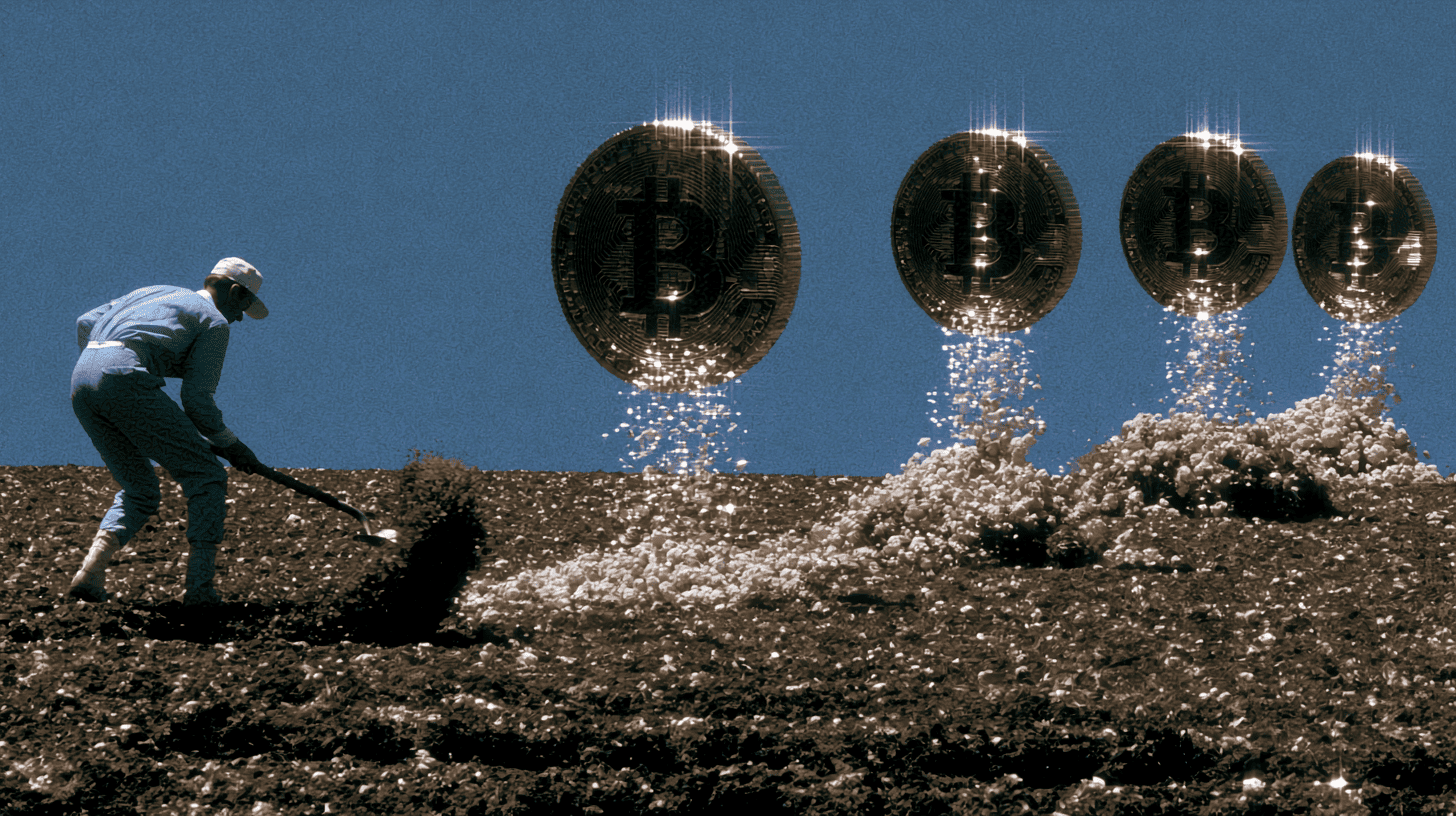
The mechanics work like this: a protocol wants to bootstrap liquidity for a new pool or a new chain deployment. To attract capital, it allocates a portion of its token supply to users who provide liquidity during a specific period. Those users receive the protocol’s governance token as a reward, denominated in a high APY to attract attention. Protocols often start with aggressive token distribution, sometimes at 500-1,000% APR in year one, to bootstrap liquidity, but yields usually decay once emissions slow.
The catch is structural. The APY is calculated using the current token price. As more capital flows in to chase the yield, the rewards dilute per dollar of TVL. As the protocol emits tokens to pay farmers, supply increases. High emissions mean early rewards, but they often lead to token price drops and reduced returns as early recipients sell their rewards into the market.
Where real yield comes from
| Yield source | Mechanism | Sustainability |
|---|---|---|
| Trading fees | Percentage of every swap through the pool | High, proportional to volume |
| Lending interest | Borrower payments distributed to depositors | High, tied to credit demand |
| Token emissions | Protocol mints tokens and distributes to LPs | Low, inflationary, finite |
| Protocol revenue share | Protocol distributes a share of its own revenue | High, tied to protocol growth |
| Bribes / vote incentives | Third parties pay LPs to direct emissions to specific pools | Medium, externally dependent |
The protocols that survived the 2022-2023 contraction were those with meaningful fee revenue that did not depend on continuous token emissions to make the yield math work. By 2025, the DeFi community started to recognize the need for more sustainable models, with builders focusing on infrastructure, interoperability, security, and connection to traditional financial systems.
Risk Profile by LP Strategy
Not all liquidity provision carries the same risk. The combination of pool type, asset volatility, and yield source determines the actual risk-adjusted return:
| Strategy | IL exposure | Emission dependency | Fee revenue | Complexity |
|---|---|---|---|---|
| Stablecoin-stablecoin (USDC/USDT) | Very low | Low | Low-medium | Low |
| Blue chip pairs (ETH/BTC) | Medium | Low to medium | Medium-high | Low |
| Volatile asset pairs | High | Often high | Variable | Medium |
| Concentrated liquidity (in-range) | Medium-high | Low | High | High |
| Concentrated liquidity (out-of-range) | Very high | n/a | Zero | High |
| Single-sided staking | None (no IL) | Medium-high | Protocol revenue | Low |
Stablecoin pools often yield 5-15% APY, while riskier strategies can exceed 25% APY. Returns are never guaranteed and depend on market conditions and platform incentives.
What Protocol Teams Get Wrong When Designing Liquidity Incentives
For teams building DeFi protocols, rather than just participating in them, the design decisions around liquidity incentives are consequential and frequently made incorrectly.
Emissions without a fee model. Launching with aggressive token emissions and no plan for organic fee revenue creates a dependency on continuous inflation that is impossible to sustain. When emissions slow or end, liquidity migrates to the next opportunity.
Shallow pool security assumptions. Building a lending protocol that reads price from a pool with $500k in TVL is an invitation to an oracle manipulation attack. Liquidity depth should be part of the security threat model from the start.
Ignoring LP economics. LPs make a rational calculation on every position. If the expected fee revenue doesn’t justify the impermanent loss risk for the asset pair and volatility profile, liquidity won’t stay regardless of how high the emission rate is.
Teams building DeFi products, whether lending platforms, AMMs, or protocol-native stablecoins, need liquidity strategy as part of the product design, not an afterthought at launch. SpaceDev’s yield farming protocol development work covers protocol architecture, smart contract development, and the integration of stablecoin infrastructure for DeFi products that need stable settlement assets alongside their liquidity mechanisms. ApeBond is a real protocol built on exactly this discipline. If you are scoping a DeFi build, book a call to discuss architecture before committing to an incentive model that is hard to reverse.