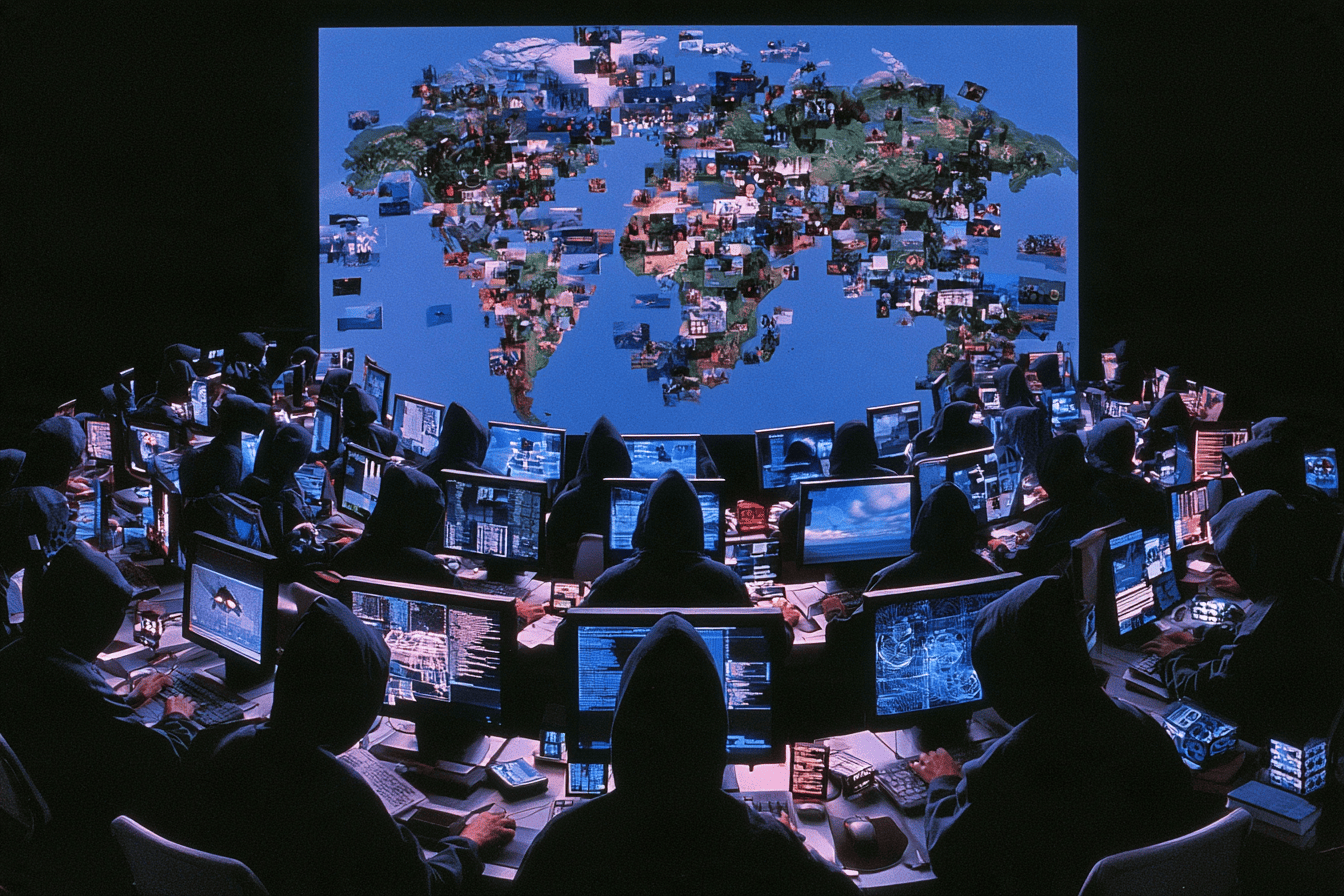

Decentralized oracles function as critical infrastructure connecting blockchain systems to external information sources. They securely pipeline off-chain data into the blockchain and thus enable smart contract executions. These systems retrieve data from APIs, IoT devices, and other blockchains, operated by either third-party providers or the blockchain network itself.
These systems bridge on-chain and off-chain information, providing decentralized applications with access to real-world data and events that cannot be directly recorded on the blockchain. Applications include decentralized exchanges relying on accurate pricing, prediction markets, insurance contracts, and supply chain management. In the context of smart contracts powering DeFi protocols, oracles are the layer that makes complex financial logic possible at all, which is why oracle integration is a standard part of our own smart contract development process.
Security mechanisms involve staking tokens and consensus algorithms across multiple data sources to ensure accuracy and tamper-proof information delivery.
Applications Beyond DeFi
Uses extend to gaming event verification, supply chain authentication tracking, and insurance claim automation triggered by predefined events like flight cancellations or natural disasters.
Oracle Classification
| Oracle Type | Description |
|---|---|
| Hardware oracles | Physical devices retrieving real-world data |
| Software oracles | More versatile but vulnerable to corruption |
| Consensus oracles | Network nodes validating data integrity |
| Blockchain-based oracles | Direct blockchain operation ensuring transparency |
| Human oracles | Subjective judgment validation, particularly useful for prediction market arbitration |
| Centralized oracles | Single-entity management offering speed but introducing single-point-of-failure risk |
| Decentralized oracles | Multi-node networks preventing tampering through distributed verification |
Importance in DeFi
These systems enable complex financial transactions by providing safe and transparent access to real-world data. Price feeds establish asset values and trigger liquidations. Insurance products require weather or flight data verification, while prediction markets depend on outcome forecasting. As real-world assets continue reshaping DeFi, reliable data feeds become even more critical; tokenized bonds and credit instruments only function correctly when the underlying asset data reaching the chain is accurate.
Challenges and Limitations
Trust verification: Validating data quality across distributed networks presents difficulties.
Interoperability and scalability: Different blockchain protocols require compatible oracle solutions as demand increases.
Operational costs: Computing resources for oracle network operations can be substantial, requiring cost-reduction strategies without compromising security.
Future Development
Advancements emphasize complex oracle systems with diverse data inputs and enhanced privacy measures. Research priorities include accuracy improvement, reliability enhancement, and scalability expansion. In Web3 contexts, these systems will enhance supply chain transparency and identity verification. Future Web5 applications envision truly autonomous decentralized systems with real-time machine decision-making capabilities; the kind of AI-agent architectures already emerging on blockchain depend directly on oracle infrastructure to act on verified real-world conditions. At the protocol level, what top Web3 protocols expect from their partners now includes reliable oracle integration as a baseline requirement, something we account for from day one in Layer 1 blockchain development.
Conclusion
Decentralized oracles represent essential blockchain ecosystem components, enabling smart contracts to interface with external data safely while automating corporate operations and facilitating complex financial transactions.