The Challenge
Mostaza came to SpaceDev with an idea that sits at a genuinely difficult intersection: bringing the benefits of Web3 (stablecoins, yield, borderless payments) to everyday users in Colombia and Latin America who have no prior experience with crypto. The opportunity was clear, but so was the execution risk.
The core challenge was simplicity. For the platform to work, the technical complexity of USDT wallets, stablecoin conversions, and yield protocols needed to be completely invisible to the end user. A person who has only ever used a traditional bank account should be able to open Mostaza and start saving or spending without feeling like they’ve stepped into a cryptocurrency exchange. Getting that balance right required careful product thinking before any code was written.
There was also the regulatory and operational dimension. Handling COP-to-USDT conversions, managing a virtual card infrastructure, and integrating a yield-bearing stablecoin like USDM all required clear decisions about architecture, compliance, and risk; those decisions needed to be made deliberately, not improvised during development.
Our Approach
SpaceDev began with a formal Discovery Sprint alongside the Mostaza team. The goal was to analyze the MVP from three angles: the product experience, the technical architecture, and the operational requirements. Rather than treating discovery as a formality, we used it to surface real tradeoffs, validate assumptions, and produce a prioritized roadmap that the entire team could execute against with confidence.
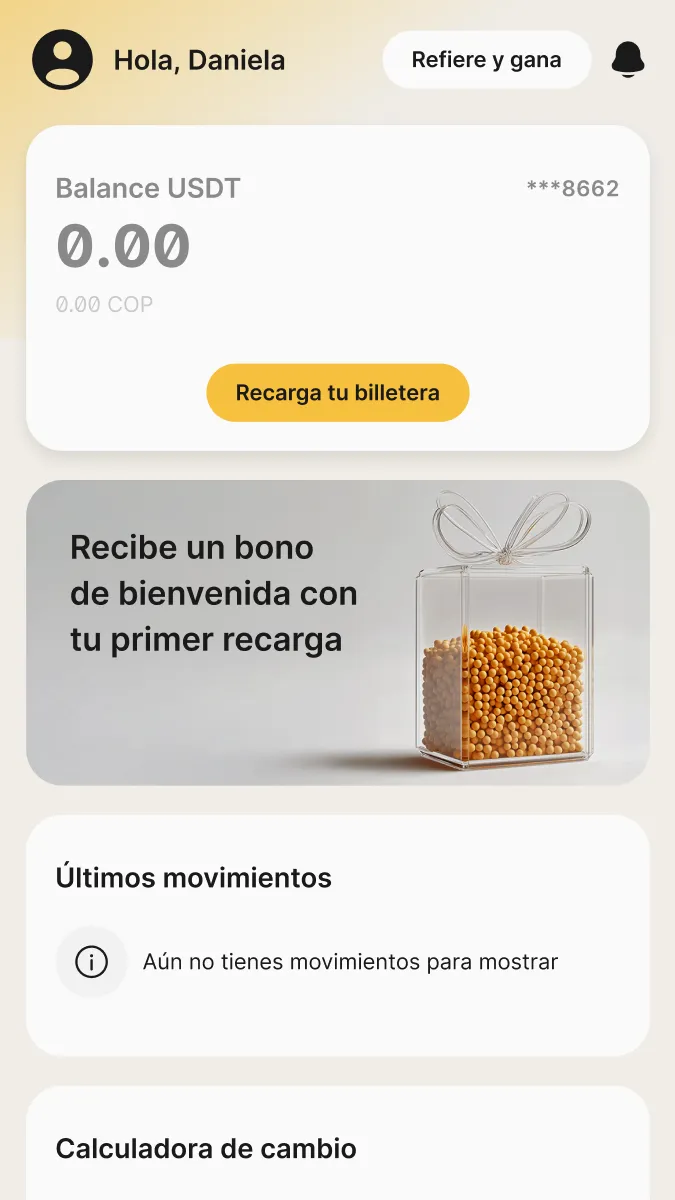
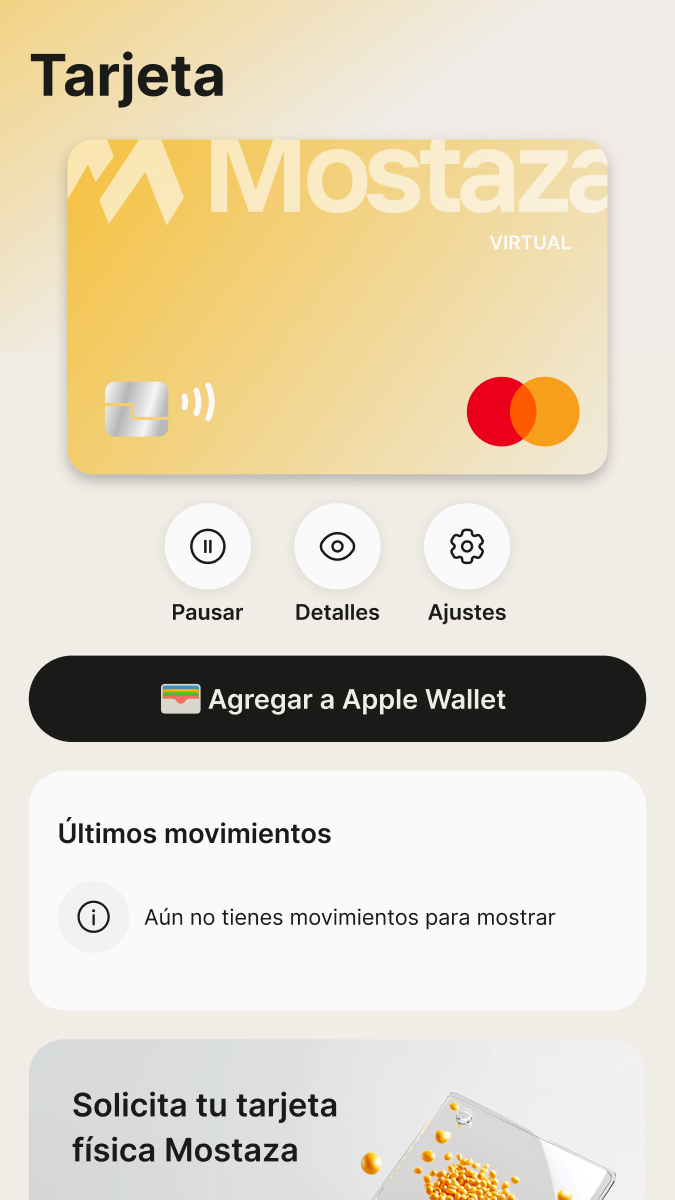
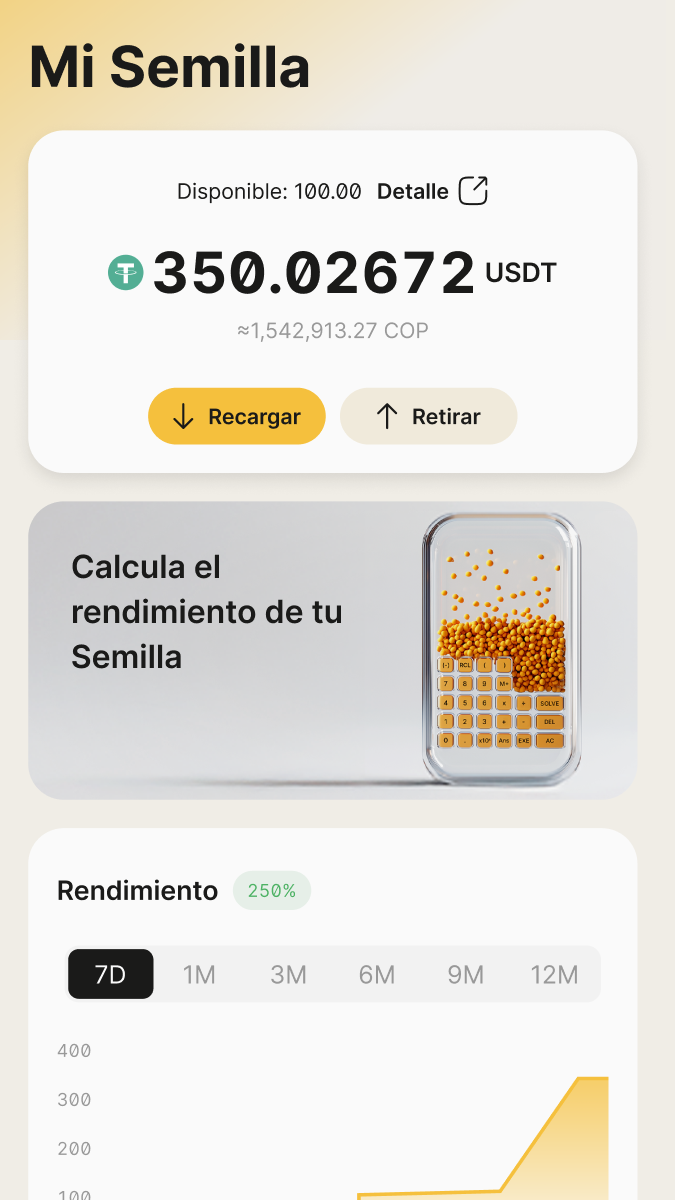
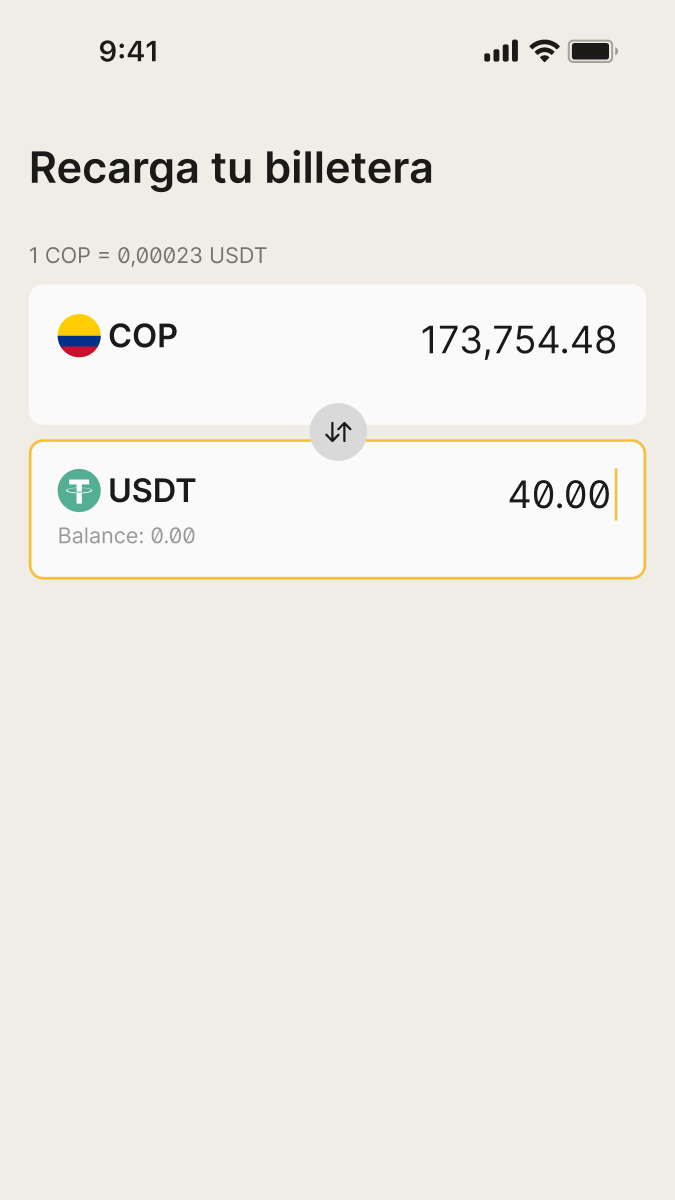
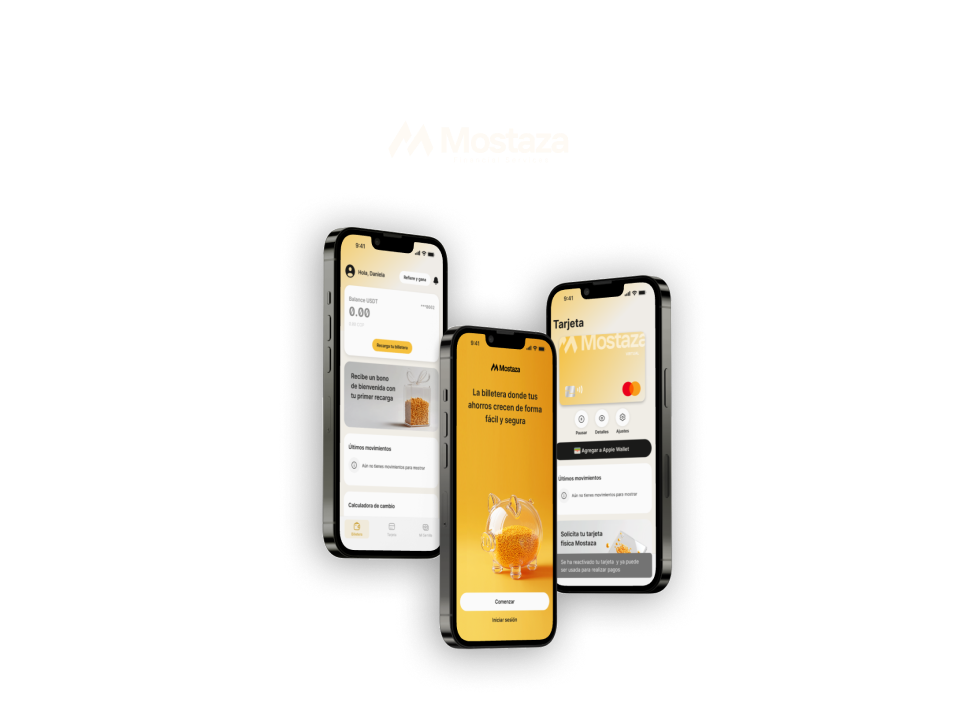
Out of that process came a clear MVP definition: a USDT wallet that handles COP-to-crypto conversion behind the scenes, a virtual card tied to the wallet balance, and a savings feature powered by USDM, the yield-bearing stablecoin from Mountain Protocol offering 4–5% APY. Each feature was designed to feel familiar and safe to users who have never held crypto before.
For development, SpaceDev assembled a team of eight: five developers covering Web3 and backend specialization, full-stack mobile, and frontend; one QA engineer; one project manager; and one product designer. The mobile app was built in React Native for cross-platform reach, while the backend used NestJS on AWS with a dual-database approach: MongoDB for flexible data and PostgreSQL for transactional integrity. Alongside the customer-facing product, we built a back-office system that gives the Mostaza internal team full visibility and control over users and transactions.
Results
The Discovery Sprint delivered what it promised: a team-wide understanding of the problem, a validated product strategy, and a roadmap that removed ambiguity from the development process. By the time coding started, every major decision had already been made deliberately.
The development phase put a cross-functional team of eight people behind a product that needed to be secure, scalable, and above all simple. The result is a platform where a user can fund their account via bank transfer, watch it convert to USDT, allocate a portion to earn yield through USDM, and spend the rest using a virtual card, all without needing to understand the mechanics underneath.
The back-office system gives the Mostaza team the operational transparency they need to manage a regulated fintech product: transaction monitoring, user management, and the ability to act quickly when issues arise.
Mostaza is now in active development, targeting a launch that will bring a genuinely new financial tool to a market where millions of people are underserved by traditional banking and still largely excluded from the benefits that Web3 can offer.
Tech Stack
The stack was chosen to handle the demands of a regulated fintech product with Web3 integrations. React Native delivers a single codebase for iOS and Android. NestJS powers a structured, maintainable backend. MongoDB handles flexible document-oriented data, while PostgreSQL manages transactional records. Everything runs on AWS, with infrastructure sized for growth across Latin America.