
Digital Securities Development Services for Security Token Platforms
SpaceDev designs and builds digital securities platforms for issuers, broker-dealers, transfer agents, and fintech companies that need compliant security token infrastructure in production, not a pilot. We cover the full stack: security token contracts, investor onboarding, ownership records that reconcile with your transfer agent, and the venues where your tokens trade.
Or subscribe to our newsletter
What we deliver
What a Digital Securities Platform Requires, and What We Build
01
Security token contracts
ERC-3643 (T-REX) or ERC-1400 contracts with identity-bound transfers, freeze, forced transfer, and recovery functions.
02
Offering-aware compliance engine
Rules that enforce your issuance exemption: investor eligibility, holding periods, jurisdiction blocks, and per-investor caps.
03
Investor onboarding and accreditation
KYC/AML, accredited investor verification, wallet screening, and on-chain identity claims reusable across offerings.
04
Ownership registry and transfer agent sync
On-chain holder registry that reconciles with the official record kept by your registered transfer agent.
05
Primary issuance workflows
Subscriptions, stablecoin or fiat payments, allocation, and minting on settlement.
06
Corporate actions and distributions
Dividends, coupons, voting, splits, and redemptions executed on schedule and logged on-chain.
07
Secondary market connectivity
ATS integrations, permissioned liquidity pools, and OTC settlement with delivery-versus-payment.
08
Issuer and compliance consoles
Cap table management, investor communications, regulatory exports, and full audit trails.
Three Tokenized Security Models, and Which One Fits Your Platform
In January 2026, SEC staff published a Statement on Tokenized Securities that groups the market into three models. The model you choose determines your custody structure, investor rights, and where the tokens can legally trade, so it is the first decision we make with you.
| Issuer-Sponsored | Third-Party Custodial | Third-Party Synthetic | |
|---|---|---|---|
| Who issues the token | The issuer or its agent | An intermediary holding the underlying security | An intermediary issuing its own instrument |
| What the holder owns | The security itself | An entitlement to the underlying security | Price exposure only |
| Eligible for the SEC Innovation Exemption | Yes, for listed US stocks | Yes, for listed US stocks | No |
| Typical builder | Companies, funds, transfer agents | Broker-dealers, custodians, fintechs | Offshore and crypto-native platforms |
Who issues the token
Issuer-sponsored: The issuer or its agent
Third-party custodial: An intermediary holding the underlying security
Third-party synthetic: An intermediary issuing its own instrument
What the holder owns
Issuer-sponsored: The security itself
Third-party custodial: An entitlement to the underlying security
Third-party synthetic: Price exposure only
Eligible for the SEC Innovation Exemption
Issuer-sponsored: Yes, for listed US stocks
Third-party custodial: Yes, for listed US stocks
Third-party synthetic: No
Typical builder
Issuer-sponsored: Companies, funds, transfer agents
Third-party custodial: Broker-dealers, custodians, fintechs
Third-party synthetic: Offshore and crypto-native platforms
For US-facing products, issuer-sponsored and custodial models are the practical route, and they are the core of our digital securities work. Synthetic structures often qualify as security-based swaps, which limits who can buy them and where they can trade.
Compliance Built Into the Token, Not Bolted On
Issuance Exemptions Enforced at the Contract Level
Most digital securities are issued under Reg D, Reg A+, Reg CF, or Reg S, and each exemption brings its own rules: accredited-only access under 506(c), investment limits for non-accredited buyers under Reg A+, a one-year transfer restriction under Reg CF, US person blocking under Reg S. We implement these as offering-level rule sets, so several offerings can run on the same token infrastructure without manual overrides.
Transfer Restrictions That Execute Automatically
With ERC-3643, every transfer is checked against the holder's verified identity and the offering's rules before it executes. A non-compliant transfer simply fails, regardless of who initiates it.
Freeze, Forced Transfer, and Recovery
Regulated platforms must respond to lost wallets, court orders, and investor offboarding. We build these administrative controls with role-based permissions and a complete audit trail.
A Clear Official Record of Ownership
The token is not automatically the legal record. Depending on your structure, the official record lives on-chain, with a registered transfer agent, or in a synchronized model. We build the reconciliation layer that keeps both views consistent and flags discrepancies before they become compliance issues.
Secondary Trading for Digital Securities
On September 17, 2026, the SEC issued its Innovation Exemption, a five-year, conditional relief that lets Tokenized Securities Venues trade tokenized US-listed stocks through permissioned automated market makers and liquidity pools without registering as an exchange. Combined with existing ATS infrastructure, issuers now have more realistic liquidity routes than ever:
01
ATS integrations
For private placements and restricted securities.
02
Permissioned liquidity pools
For tokenized listed equities under the new exemption.
03
OTC and bilateral settlement
With atomic delivery-versus-payment for institutional trades.
Because the exemption is temporary and the rules are still evolving, we design the compliance layer so it can be updated without migrating your token contracts.
Digital Securities Tech Stack
Token Standards
ERC-3643 (T-REX) with ONCHAINID, ERC-1400, SPL Token-2022 with transfer hooks
Networks
Ethereum, Polygon, Avalanche, Base, Solana, permissioned EVM networks
Smart Contract Infrastructure
Solidity, Rust (Anchor), Hardhat, Foundry, OpenZeppelin, upgradeable proxy patterns
KYC/AML and Identity
Sumsub, Jumio, Onfido, accredited investor verification, Chainalysis or Elliptic wallet screening
Custody Integrations
Fireblocks MPC, Anchorage, Copper, Gnosis Safe multi-sig
Payments and Settlement
USDC and regulated stablecoins, fiat on-ramps, atomic DvP settlement
How We Build Digital Securities Platforms
-
Model and Pathway Scoping
We define the tokenization model, issuance exemptions, record-keeping structure, and target trading venues with your legal counsel and transfer agent. Our Product Discovery service can run this as a standalone engagement.
-
Compliance Rule Design
We translate each offering's legal requirements into documented rule sets your compliance team can review before any code ships.
-
Smart Contract and Identity Layer
We build the security token contracts, the on-chain identity registry, and administrative controls for freezes, forced transfers, and recovery.
-
Registry and Integrations
We connect the platform to your transfer agent, custodian, KYC providers, and payment rails, with reconciliation and exception handling.
-
Portals and Trading Connectivity
We build issuer and investor portals, corporate actions tooling, and the ATS, liquidity pool, or OTC integrations your distribution plan requires.
-
Security Review and Pre-Launch Audit
Every contract and integration goes through structured security review, with BlockAudit available for independent audits focused on compliance bypasses and privilege escalation.
Engagement Models
End-to-End Platform Delivery
One team owns architecture, contracts, integrations, and the product layer, from discovery to launch.
Team Augmentation
Senior smart contract and backend engineers join your in-house team through IT Staff Augmentation.
Architecture and Pre-Audit Review
For teams already building, we review token design, compliance logic, and upgrade paths before external audits.
Related Services for Digital Securities Projects
Stock Tokenization
Equity issuance, cap tables, and corporate actions on-chain
Bond Tokenization
Coupon automation, maturity logic, and T+0 settlement
Smart Contract Development
Audited ERC-3643 and ERC-1400 security token contracts
Web3 Compliance Development
KYC/AML, transfer restrictions, and regulatory infrastructure
Our Work in Action
Take a closer look at how our services have helped teams ship at scale.
Frequently Asked Questions
What are digital securities?
What is the difference between a security token and a crypto token?
Is an STO the same as asset tokenization?
What does the SEC's Innovation Exemption mean for tokenized securities?
Do we need a registered transfer agent?
Should we build a custom platform or use a white-label solution?
From Our Blog
Related Reading

Ethereum Adoption Trends 2027: Privacy Is the Bottleneck
Ethereum hosts most of the tokenized RWA market, but the privacy technology institutions actually adopted runs on permissioned networks. What Ethereum ships in 2027 decides whether tokenization ends up open or enclosed.
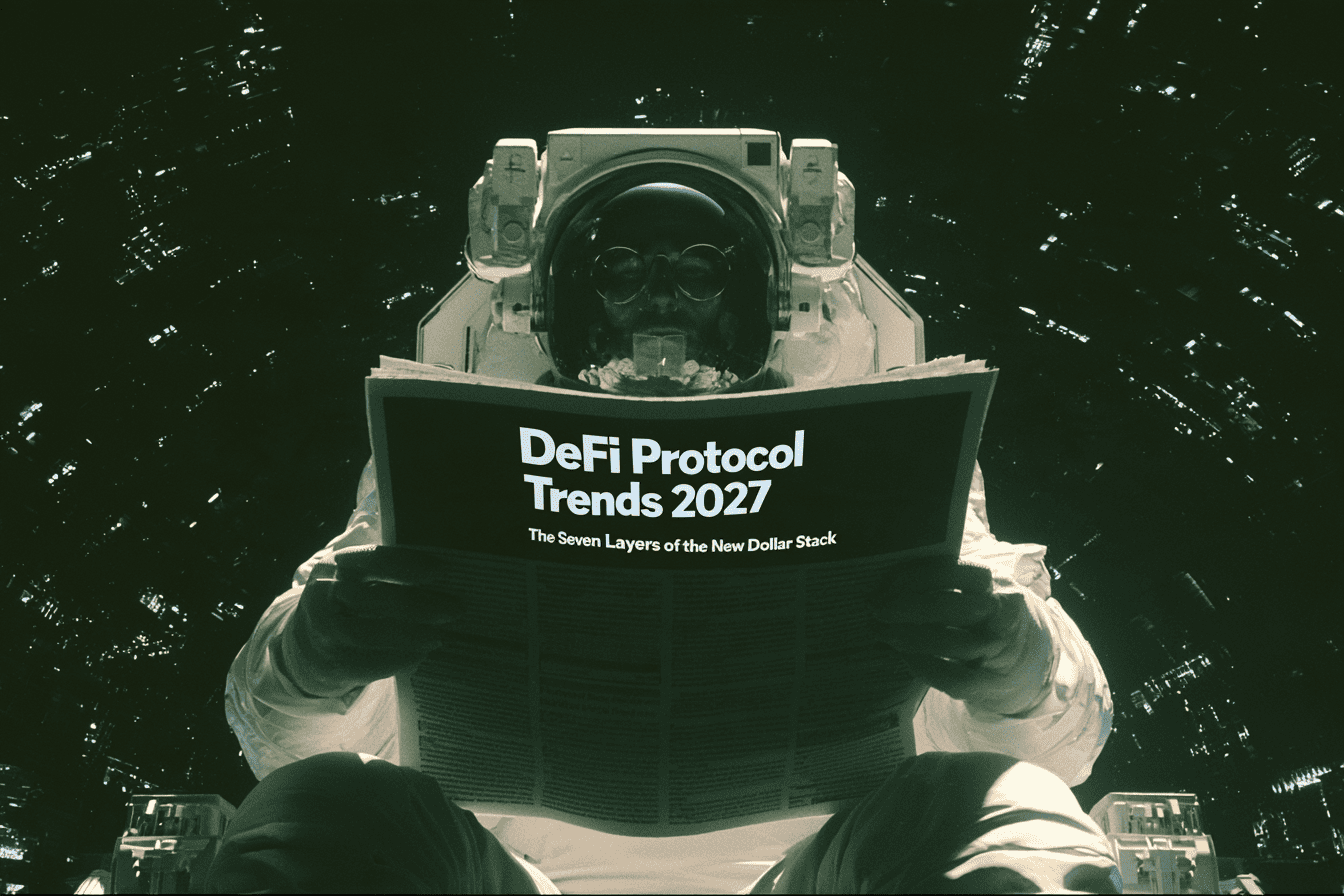
DeFi Protocol Trends 2027: The Seven Layers of the New Dollar Stack
DeFi protocols stopped being governance tokens and became businesses with revenue, while the stack broke into specialised layers. A layer-by-layer analysis of Sky, Aave, Frax, Ethena, M0, Perena and Axal heading into 2027.

Blockchain in Energy: Which Use Cases Are Real, and Which Are Hype
Blockchain energy use cases in 2026, sorted by maturity: proven in REC and carbon credit tokenization, still early for P2P trading and grid settlement.
Build Your Digital Securities Platform with SpaceDev
The rules for on-chain capital markets are being written now, and platforms built on rigid assumptions will need rebuilding as they change. We build digital securities infrastructure that enforces today's requirements and adapts to what comes next.