
Blockchain Development for Telecom Operators, MVNOs, and Wholesale Carriers
SpaceDev builds blockchain infrastructure for mobile network operators, MVNOs, wholesale carriers, and connectivity platforms that need to settle faster between partners, fight fraud, and open new revenue lines without replacing their core network or BSS stack. From inter-operator settlement to subscriber wallets and decentralized coverage, we deliver production systems, not proofs of concept.
Or subscribe to our newsletter
Blockchain Development Services for Telecom Companies
Full-cycle blockchain engineering across wholesale, fraud, subscriber, and network operations.
01
Wholesale Roaming and Interconnect Settlement
Smart contract settlement for roaming and voice interconnect agreements: rated usage records, discount calculations, and automated reconciliation between operators, with threshold-based dispute resolution that shortens settlement cycles from months to days.
02
Telecom Fraud Prevention and Identity Verification
Shared fraud registries and verifiable credentials that help operators and their partners detect SIM swap fraud, subscription fraud, and interconnect bypass. We integrate network APIs such as SIM Swap and Number Verification into wallets, fintech apps, and exchanges to block account takeovers.
03
Subscriber Wallets, Payments, and Stablecoin Services
Embedded wallets, stablecoin payments, and cross-border transfers built into operator apps, with fiat on-ramps and a consumer experience that never exposes seed phrases or gas fees to the subscriber.
04
Tokenized Loyalty and Rewards Programs
Loyalty points that subscribers can transfer, redeem across partner merchants, or convert into spendable value, reducing points liability and making rewards programs a reason to stay with the operator.
05
DePIN and Decentralized Network Integration
Integrations with decentralized wireless networks for carrier offload, plus reward logic, coverage verification, and hotspot operator dashboards for companies building community-owned coverage in high-demand areas.
06
Validator Infrastructure and Enterprise Node Services
Validator and node infrastructure for operators that want to monetize data center capacity and uptime expertise by securing public blockchains, with monitoring, key management, and staking operations.
Where Blockchain Creates Value Across the Telecom Value Chain
| Telecom Segment | Core Problem | Blockchain Application |
|---|---|---|
| Wholesale and roaming | Slow, dispute-heavy settlement between operators | Shared ledger and smart contract settlement |
| Fraud and security | SIM swap and identity fraud across partners | Shared fraud signals, network API integration |
| Consumer services | Low engagement with loyalty and payments | Tokenized rewards, embedded wallets |
| Network coverage | High cost of densification in busy areas | DePIN carrier offload integration |
| Enterprise and IoT | Device identity and data integrity at scale | On-chain device identity and event anchoring |
| Infrastructure | Underused data center and edge capacity | Validator and node operations |
Wholesale and roaming
Core problem: Slow, dispute-heavy settlement between operators
Application: Shared ledger and smart contract settlement
Fraud and security
Core problem: SIM swap and identity fraud across partners
Application: Shared fraud signals, network API integration
Consumer services
Core problem: Low engagement with loyalty and payments
Application: Tokenized rewards, embedded wallets
Network coverage
Core problem: High cost of densification in busy areas
Application: DePIN carrier offload integration
Enterprise and IoT
Core problem: Device identity and data integrity at scale
Application: On-chain device identity and event anchoring
Infrastructure
Core problem: Underused data center and edge capacity
Application: Validator and node operations
Which Telecom Blockchain Use Cases Are Already in Production
Most articles on blockchain in telecom still describe use cases that never shipped. Here is where the market actually stands.
Live Today: Roaming Settlement on the GSMA eBusiness Network
The GSMA's blockchain network, built on Hyperledger Fabric with operators including Deutsche Telekom, Orange, Telefónica, Verizon, and Vodafone involved in its development, supports roaming agreement negotiation and automated discount settlement between operators.
Live Today: DePIN Carrier Offload
Decentralized wireless networks now carry real subscriber traffic. Helium's community-deployed hotspots offload data for mobile carriers, and in September 2026 Helium launched HeliumOS, a carrier enablement platform aimed at MVNOs, ISPs, and operators.
Live Today: Operators as Blockchain Validators
Deutsche Telekom runs validator infrastructure on multiple public networks through its MMS subsidiary, and NTT DOCOMO GLOBAL joined a public network's validator set in 2026. For operators, this is a new infrastructure revenue line built on existing strengths.
Still Early: Network Slicing Marketplaces and Spectrum Sharing
Automated marketplaces for 5G network slices and dynamic spectrum sharing are technically promising but remain in research and pilot stages. We help operators evaluate them honestly before committing budget.
Integrating Blockchain with OSS/BSS and Network APIs
A telecom blockchain platform only works if it connects to the systems that already run the business.
OSS/BSS, Billing, and Rating Integration
We connect the settlement layer to rating engines, billing platforms, and data clearing house outputs through APIs and event streams, so usage records flow on-chain without manual exports.
GSMA Open Gateway and CAMARA Network APIs
We integrate standardized network APIs, such as SIM Swap, Number Verification, and Device Location, into Web3 and fintech products, turning operator network intelligence into a fraud-prevention layer.
Subscriber Data Privacy and Compliance
Personal data and CPNI never go on-chain. We store hashes, proofs, and aggregated records on the ledger while subscriber data stays in your systems, aligned with GDPR, CPNI rules, and your internal data policies.
Blockchain Networks for Telecom Platforms
Network choice depends on who participates and what is being settled. Permissioned networks like Hyperledger Fabric and Besu fit inter-operator settlement, where participants are known and data is commercially sensitive. Public EVM chains such as Ethereum, Polygon, and Base suit subscriber wallets, loyalty tokens, and stablecoin payments that need open interoperability. Solana is the natural choice for DePIN integrations, since major decentralized wireless networks settle there. We evaluate trade-offs per project and often combine them.
Delivery Process for Telecom Blockchain Projects
01
Discovery Sprint
We map your settlement, fraud, or subscriber workflows, identify where blockchain adds measurable value and where it does not, and define scope, architecture, and integrations. Our Product Discovery service covers this phase.
02
Build and Integration
Milestone-based delivery with working demos, integration testing against real CDR, billing, or API data, and security reviews at every stage.
03
Launch and Scale
Production deployment, monitoring, smart contract upgrades, and onboarding of new partners or operators as the network grows.
Engagement Models for Telecom Blockchain Development
End-to-End Platform Delivery
SpaceDev owns architecture, development, security review, and launch.
Team Augmentation
Blockchain engineers embedded in your digital or innovation team through IT Staff Augmentation.
Architecture and Advisory
Technology selection, business case validation, and architecture design for telecom teams evaluating blockchain before committing to a build.
Related Blockchain Services for Telecom Projects
Smart Contract Development
Settlement, loyalty, and reward logic for multi-party telecom agreements
Decentralized Identity
Verifiable credentials for subscriber and device identity
Crypto Token Development
Loyalty tokens and reward systems for subscriber programs
BlockAudit: Blockchain Security
Smart contract audits before production launch
Why Telecom Companies Choose SpaceDev for Blockchain Development
Integration-First Architecture
We design around your BSS, billing, and network API stack from day one, so the platform works inside real telecom operations rather than beside them.
Consumer-Scale Web3 Experience
We have shipped Web3 products used by tens of thousands of daily users with embedded wallets and social login, the level of simplicity telecom subscribers expect.
Honest Use Case Assessment
We tell you which telecom blockchain use cases are production-ready and which are still experimental, before you invest.
Security and Compliance Built In
ISO 27001 and SOC 2 practices, privacy-by-design data architecture, and BlockAudit reviews for every production smart contract.
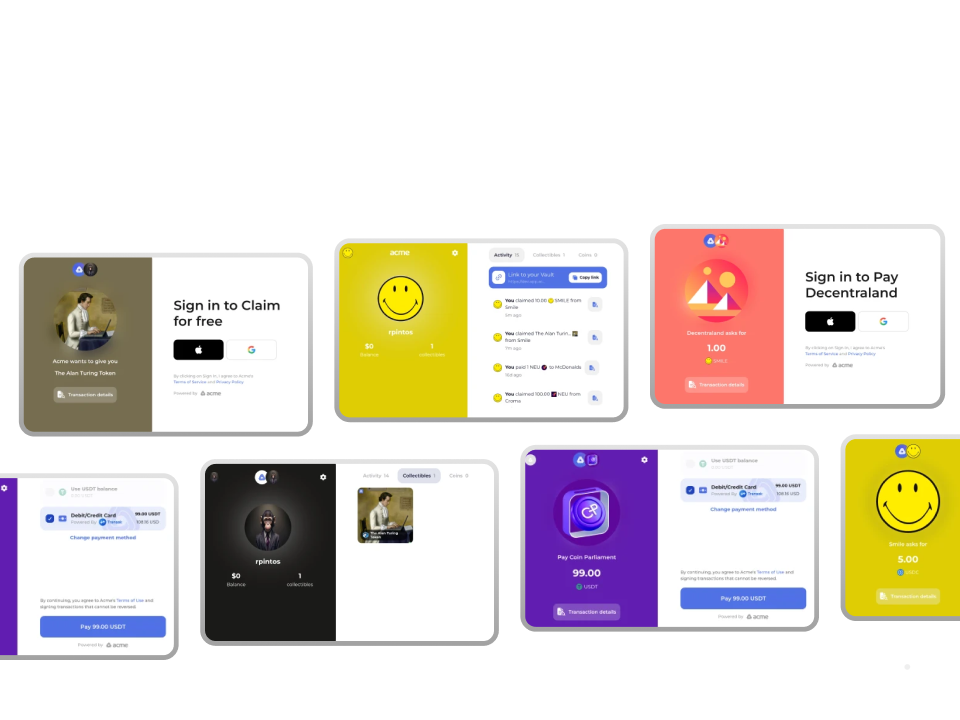
Web3 Capabilities Proven in Production
Take a closer look at how our services have helped teams ship at scale.
Frequently Asked Questions
How is blockchain used in the telecom industry?
Does blockchain replace our BSS or billing systems?
Is subscriber data stored on the blockchain?
What is DePIN carrier offload, and why does it matter for operators?
Which blockchain is best for telecom applications?
How long does a telecom blockchain project take?
From Our Blog
Related Reading

Decentralized Identity: How DIDs and Verifiable Credentials Enable Reusable KYC
How decentralized identity works, from DIDs and verifiable credentials to self-sovereign identity, reusable KYC, and the 2026 standards and regulations driving adoption.

Blockchain Supply Chain Traceability: How It Works and Where It Breaks
Product traceability blockchain, explained: EPCIS event capture, IoT and oracles, where it breaks, and the 2026 regulations driving adoption.

DePIN and Decentralized AI: How Physical Infrastructure Is Being Put On-Chain
DePIN explained: how decentralized physical infrastructure networks work, why AI compute is driving growth, and what Akash, Render, Bittensor, and Aethir actually do.
Build Blockchain Infrastructure for Your Telecom Business
Whether you need faster settlement with roaming partners, stronger fraud defenses, a rewards program subscribers actually use, or a path into decentralized coverage, SpaceDev has the blockchain depth and integration experience to deliver it.