
Crypto Trading Bot Development Services for Exchanges, Fintechs, and Trading Platforms
SpaceDev builds crypto trading bots and automated trading infrastructure for exchanges, fintech apps, DeFi platforms, and trading teams that need reliable execution, strict risk controls, and secure key management, not a template script with a strategy bolted on. We cover the full stack: strategy engines, on-chain and exchange execution, automated orders, backtesting, and the interfaces your users trade from.
Or subscribe to our newsletter
Crypto Trading Bot Development Services for Exchanges, Fintechs, and Trading Platforms
SpaceDev builds crypto trading bots and automated trading infrastructure for exchanges, fintech apps, DeFi platforms, and trading teams that need reliable execution, strict risk controls, and secure key management, not a template script with a strategy bolted on. We cover the full stack: strategy engines, on-chain and exchange execution, automated orders, backtesting, and the interfaces your users trade from.
See our workWhat a Production Crypto Trading Bot Requires, and What We Build
01
Strategy and signal engine
Rule-based, indicator-driven, or AI-assisted logic, with parameters your team can tune without redeploying.
02
Exchange and DEX execution layer
Order routing to centralized exchanges through their APIs and to DEXs and aggregators on-chain, with slippage and gas controls.
03
Automated order types
Stop-loss, take-profit, trailing stops, DCA, and grid orders executed reliably, even when the user is offline.
04
Market data infrastructure
Real-time prices, order books, and on-chain data feeds with failover between providers.
05
Backtesting and paper trading
Historical simulation with realistic fees, slippage, and latency, plus paper trading before capital goes live.
06
Risk management layer
Position limits, exposure caps, drawdown thresholds, and kill switches enforced outside the strategy logic.
07
Wallet and key security
Non-custodial wallets, scoped session keys, and MPC or HSM-backed signing for custodial setups.
08
User interfaces and monitoring
Web, mobile, or Telegram interfaces, plus dashboards, alerts, and audit logs for every automated action.
Types of Crypto Trading Bots We Develop
DeFi Trading Bots and On-Chain Execution
Bots that trade directly on DEXs and aggregators across EVM chains and Solana, with cross-chain routing, gas optimization, and MEV-protected transaction submission through private RPC endpoints.
Centralized Exchange (CEX) Trading Bots
Algorithmic trading systems connected to exchange APIs, with rate-limit handling, order state reconciliation, and resilient reconnection logic for 24/7 operation.
Telegram Trading Bots
Trading bots that let users buy, sell, and manage positions from a chat interface, with self-custodial wallets provisioned at sign-up and confirmation flows that prevent costly mistakes.
AI Trading Assistants and Agents
Conversational assistants and AI agents that explain market data, suggest actions, and execute trades within limits the user sets. The AI proposes; the risk layer decides what can actually be executed.
Automated Order and Portfolio Bots
Stop-loss, take-profit, DCA, grid, and rebalancing bots for retail platforms and wallets that want to offer advanced order types without custody of user funds.
Arbitrage and Liquidity Bots
CEX-to-DEX and cross-chain arbitrage systems, liquidation bots for lending protocols, and liquidity management for exchanges and token issuers, built with self-trade prevention and full audit trails.
Non-Custodial and Custodial Trading Bot Architecture
The custody model is the most important decision in a trading bot project, because it defines your security exposure and, often, your regulatory obligations.
Non-Custodial Bots with Scoped Permissions
Users keep control of their assets. The bot acts through session keys or smart account permissions (ERC-4337 and EIP-7702) limited to specific tokens, amounts, and time windows, and automation services execute orders only within those limits.
Custodial and Institutional Setups
For trading desks and funds operating their own capital, we build execution infrastructure with MPC or HSM-based signing, role-based approvals, and withdrawal allowlists, so no single key or person can move funds.
Risk Controls and Security for Automated Trading
Kill Switches and Exposure Limits
Every bot we build has hard limits that live outside the strategy code: maximum position size, daily loss thresholds, and a kill switch that halts trading instantly when something behaves unexpectedly.
Token and Contract Risk Screening
Before a trade executes, the bot can check the target token for honeypot patterns, suspicious ownership permissions, and liquidity risks, surfacing automated risk signals instead of blind execution.
Backtesting Without False Confidence
Most backtests look better than live results because they ignore fees, slippage, and data leakage. We model execution costs realistically and validate strategies in paper trading before real capital is at risk.
Smart Contract Audits
When bots rely on custom contracts for vaults, automation, or routing, those contracts go through structured review, with BlockAudit available for independent audits.
Crypto Trading Bot Tech Stack
Languages and Frameworks
TypeScript, Node.js, Python, Rust, Solidity, React, React Native
DeFi Routing and Execution
LI.FI, Jupiter, 1inch, Uniswap, private RPC and MEV protection services
Automation and Order Execution
Gelato, Chainlink Automation, Safe modules, ERC-4337 smart accounts
Market Data
Mobula, CoinGecko, exchange WebSocket feeds, Chainlink and Pyth price feeds
Infrastructure
Redis, BullMQ, PostgreSQL, AWS or Azure, Alchemy and QuickNode RPC
Wallets and Onboarding
Particle Network, Privy, embedded wallets, MPC signing with Fireblocks
Independent Security Review
BlockAudit: Blockchain Security
When a trading bot relies on custom contracts for vaults, automation, or routing, BlockAudit (SpaceDev's dedicated security division) provides full smart contract audits and pre-launch hardening before any bot reaches production.
How We Build Crypto Trading Bots
Strategy and Product Discovery
We define the bot's role, target venues, custody model, order types, and risk limits. Our <a href="/product-discovery" class="underline hover:text-white">Product Discovery</a> service can run this as a standalone engagement.
Architecture and Data Layer
We design the execution architecture, select data providers with failover, and set up the infrastructure for low-latency, always-on operation.
Execution Engine and Integrations
We build exchange and DEX connectors, order management, and automation for stop-loss, take-profit, and scheduled strategies.
Backtesting and Paper Trading
We validate strategies against historical data with realistic costs, then run them in paper trading against live markets.
Interfaces and Monitoring
We ship the web, mobile, or Telegram interface, plus operator dashboards, alerting, and audit logs.
Security Review and Controlled Launch
We review keys, permissions, and contracts, then launch with conservative limits that scale as the system proves itself.
Engagement Models
End-to-End Bot Development
One team owns strategy engineering, execution, infrastructure, and interfaces, from discovery to launch.
Team Augmentation
Senior blockchain and backend engineers join your trading team through IT Staff Augmentation.
Architecture and Security Review
For teams with an existing bot, we review execution reliability, key management, and risk controls before you scale capital.
Related Services for Trading Bot Projects
DeFi Development Services
Protocols, DEXs, and financial infrastructure for Web3 fintech
Stablecoin Development
Stablecoin rails for trading, settlement, and payments
Yield Farming Development
Reward and incentive mechanics bots often trade around
Lending Protocol Development
Money markets bots monitor for rate and liquidation opportunities
Agentic AI Development
AI agents that plan and execute tasks within defined guardrails
White Label Crypto Exchange
Exchange platforms with built-in trading automation
Our Work in Action
Take a closer look at how our services have helped teams ship at scale.
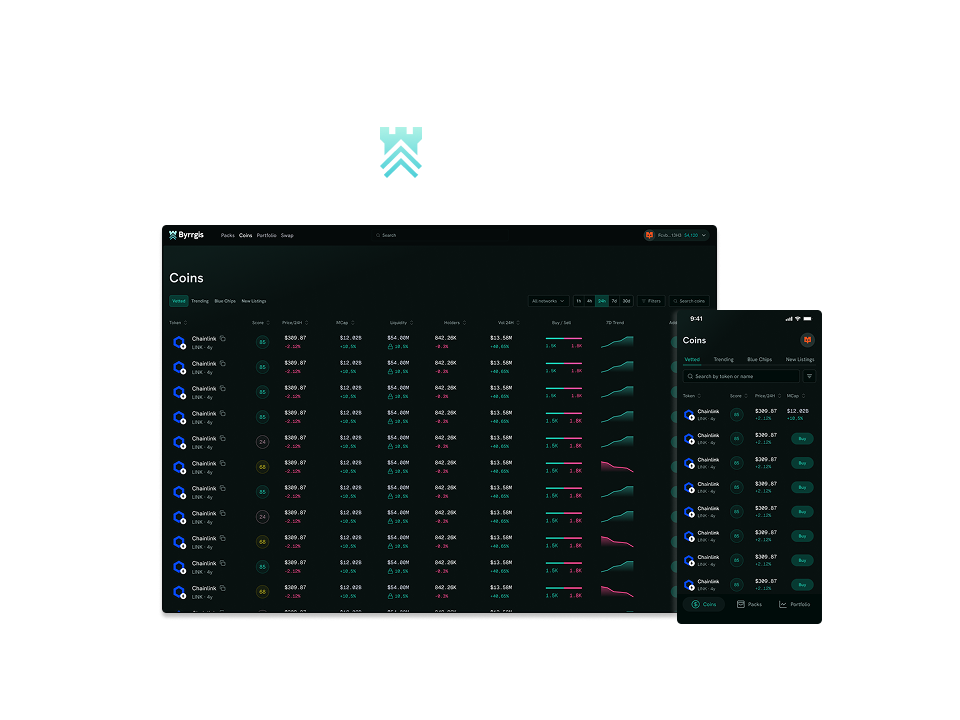

Frequently Asked Questions
What is a crypto trading bot?
Can you build a bot that guarantees profits?
What is the difference between a DeFi trading bot and a CEX trading bot?
How do non-custodial trading bots work?
Are there regulatory considerations for trading bot platforms?
How long does it take to build a crypto trading bot?
From Our Blog
Related Reading

Cryptocurrency Trends 2027: Stablecoin Supply Slowed, Usage Did Not
Stablecoin supply growth slowed sharply while transfer volume grew 87%. What that gap means for anyone building on stablecoin rails before GENIUS Act enforcement begins on 18 January 2027.

Smart Contract Security Statistics 2026: Hacks, Losses and Root Causes
Crypto hack and smart contract security statistics for 2025 and 2026, sourced from TRM Labs, CertiK, Chainalysis, Immunefi, Hacken, the FBI and academic research. Every figure is linked to its original publisher and updated quarterly.
DeFi Protocol Trends 2027: The Seven Layers of the New Dollar Stack
DeFi protocols stopped being governance tokens and became businesses with revenue, while the stack broke into specialised layers. A layer-by-layer analysis of Sky, Aave, Frax, Ethena, M0, Perena and Axal heading into 2027.
Build Your Crypto Trading Bot with SpaceDev
Automated trading rewards precision and punishes shortcuts. We build trading bots with the execution reliability, risk controls, and security your users and your capital depend on.