
Commodity Tokenization Development Services for Platforms Backed by Real Physical Assets
SpaceDev designs and builds commodity tokenization platforms for traders, producers, vault operators, commodity funds, and fintech companies that need every token backed by a verifiable physical asset, not a price feed with a marketing layer on top. We cover the full stack: token issuance, vault and warehouse integration, Proof of Reserves, quality and provenance data, redemption logistics, and the markets where your tokens trade.
Or subscribe to our newsletter
What we deliver
What a Commodity Tokenization Platform Requires, and What We Build
01
Asset-backed token contracts
Minting and burning tied to confirmed deposits and releases, with transfer controls and circuit breakers.
02
Vault and warehouse integration
API connections to custodians, vaults, and warehouse operators for real-time inventory data.
03
Proof of Reserves
On-chain verification that circulating supply never exceeds verified physical holdings.
04
Quality, grade, and provenance records
Assay certificates, grading reports, serial numbers, and origin data linked to each lot or unit.
05
Redemption and delivery workflows
Physical delivery requests, cash settlement options, minimum lot handling, and logistics tracking.
06
KYC/AML and access controls
Investor verification, wallet screening, and jurisdictional restrictions on issuance and redemption.
07
Pricing and oracle infrastructure
Commodity price feeds, NAV calculations, and fee logic for storage, insurance, and redemption.
08
Trading and marketplace layer
Peer-to-peer swaps, marketplace listings, DEX liquidity, and cross-chain availability.
Commodities We Tokenize
Precious Metals
Silver, platinum, and palladium follow the same vault-backed logic as gold, but with different lot sizes, storage costs, and price volatility that affect redemption design and fee structures. For gold-specific platforms, see our Gold Tokenization service.
Energy Commodities
Crude oil, refined products, and LNG cargoes can be tokenized to fractionalize inventory, speed up trade settlement, or collateralize financing. These platforms depend on storage terminal data, inspection reports, and title transfer workflows rather than a single vault.
Agricultural Commodities
Coffee, cocoa, grain, and other soft commodities are typically tokenized through warehouse receipts, with quality certificates and origin data attached to each lot. Provenance is often as valuable to buyers as the commodity itself.
Industrial and Battery Metals
Copper, lithium, nickel, and cobalt increasingly require verifiable sourcing. Tokenization combines ownership transfer with a traceable chain of custody from mine or refinery to end buyer.
Trade Finance and Inventory Financing
Tokenized commodity inventory can serve as collateral for working capital lines, giving lenders real-time visibility into the goods backing their exposure instead of periodic manual audits.
Choosing the Right Custody Model
How the physical asset is held determines what the token legally represents and what the platform has to build.
| Allocated | Unallocated (Pooled) | Warehouse Receipt | |
|---|---|---|---|
| What the token represents | Specific, identified units (bars, lots, serial numbers) | A share of a pooled inventory | Title to goods stored by a warehouse operator |
| Holder protection | Highest, assets are segregated | Depends on the custodian's balance sheet | Depends on the receipt's legal status |
| Platform complexity | Unit-level registry and reconciliation | Aggregate reserve tracking | Receipt issuance, endorsement, and cancellation logic |
| Best fit | Precious metals, high-value lots | Retail savings and micro-investing | Agricultural and energy commodities |
What the token represents
Allocated: Specific, identified units (bars, lots, serial numbers)
Unallocated (pooled): A share of a pooled inventory
Warehouse receipt: Title to goods stored by a warehouse operator
Holder protection
Allocated: Highest, assets are segregated
Unallocated (pooled): Depends on the custodian's balance sheet
Warehouse receipt: Depends on the receipt's legal status
Platform complexity
Allocated: Unit-level registry and reconciliation
Unallocated (pooled): Aggregate reserve tracking
Warehouse receipt: Receipt issuance, endorsement, and cancellation logic
Best fit
Allocated: Precious metals, high-value lots
Unallocated (pooled): Retail savings and micro-investing
Warehouse receipt: Agricultural and energy commodities
Most platforms combine models, for example pooled holdings for retail users with allocated redemption above a minimum size. We map this during scoping, together with your legal advisors and custody partners.
How Commodity Tokenization Works at the Infrastructure Level
Custody Integration and Reconciliation
The platform needs a live connection between the physical inventory and the on-chain supply. We integrate with your custodian or warehouse systems, automate mint and burn events from deposit and release confirmations, and build a reconciliation layer that flags discrepancies before they reach the chain.
Proof of Reserves Investors Can Verify
Periodic PDF audits are no longer enough. We implement Chainlink Proof of Reserve or custom attestation feeds, plus contract logic that pauses minting automatically if verified reserves fall below circulating supply.
Quality and Provenance Data
A barrel of crude or a bag of coffee is only as valuable as its grade and origin. We attach inspection certificates, assays, and chain-of-custody records to each token or lot, stored on-chain as hashes with the source documents kept off-chain.
Redemption and Physical Delivery
Redemption is where most commodity platforms break. We build request flows, minimum lot aggregation, delivery scheduling, cash settlement alternatives, and exception handling for vault or logistics delays, so on-chain state always matches what happened in the physical world.
Compliance for Tokenized Commodities
The regulatory treatment of a commodity token depends on its structure. A token that simply represents title to a stored commodity is generally treated differently from one that pools assets and promises returns, which may be a security. In the US, commodity markets fall under the CFTC, whose December 2025 staff guidance took a technology-neutral approach to tokenized assets used as collateral. In the EU, some commodity-referenced tokens fall under MiCA.
We build the compliance controls your legal team defines: KYC/AML onboarding, wallet screening, jurisdictional restrictions, transfer controls, and audit trails for every issuance and redemption event. We do not provide legal or regulatory advice.
Commodity Tokenization Tech Stack
Token Standards
ERC-20 with access controls, ERC-721 and ERC-1155 for unit-level and lot-level assets, ERC-3643 for regulated offerings, SPL Token-2022 on Solana
Networks
Ethereum, Base, Polygon, Avalanche, BNB Chain, Solana
Smart Contract Infrastructure
Solidity, Rust (Anchor), Hardhat, Foundry, OpenZeppelin, upgradeable proxy patterns
Reserves and Pricing
Chainlink Proof of Reserve, Chainlink and Pyth commodity price feeds, custom custodian API adapters
KYC/AML and Identity
Sumsub, Jumio, Onfido, wallet screening via Chainalysis or Elliptic
Payments and Cross-Chain
USDC and fiat on-ramps, embedded wallets, cross-chain bridges via LayerZero or Wormhole
How We Build Commodity Tokenization Platforms
-
Asset and Custody Scoping
We define the commodity, custody model, vault or warehouse partners, redemption terms, and regulatory framework before any architecture decisions. Our Product Discovery service covers this as a standalone engagement.
-
Token and Contract Design
We build issuance contracts with mint and burn logic tied to custody events, transfer controls, and reserve circuit breakers.
-
Custody, Reserves, and Data Integration
We connect the platform to your custodians and data providers, implement Proof of Reserves, and attach quality and provenance records.
-
Onboarding and Compliance Controls
We build investor onboarding, wallet screening, and jurisdictional access rules for issuance, trading, and redemption.
-
Product and Marketplace Layer
We build investor apps, issuer consoles, redemption flows, and the marketplace or DEX integrations your distribution model needs.
-
Security Review and Audit
Asset-backed tokens are high-value targets. Every contract goes through structured review, with BlockAudit available for independent audits focused on minting authorization bypasses and oracle manipulation.
Related Services for Commodity Tokenization Projects
Gold Tokenization
Vault-backed gold tokens with Proof of Reserves and physical redemption
Carbon Credit Tokenization
Registry-linked environmental commodities and retirement tracking
Blockchain for Supply Chain and Logistics
Provenance and chain-of-custody infrastructure
Blockchain for Energy
Energy asset tokenization and data trust layers
Our Work in Action
Take a closer look at how our services have helped teams ship at scale.
Frequently Asked Questions
What is commodity tokenization?
Which commodities can be tokenized?
How does a commodity-backed token stay fully backed?
Are tokenized commodities securities?
Can token holders redeem for the physical commodity?
Should we build our own platform or use an existing commodity token?
From Our Blog
Related Reading

Ethereum Adoption Trends 2027: Privacy Is the Bottleneck
Ethereum hosts most of the tokenized RWA market, but the privacy technology institutions actually adopted runs on permissioned networks. What Ethereum ships in 2027 decides whether tokenization ends up open or enclosed.
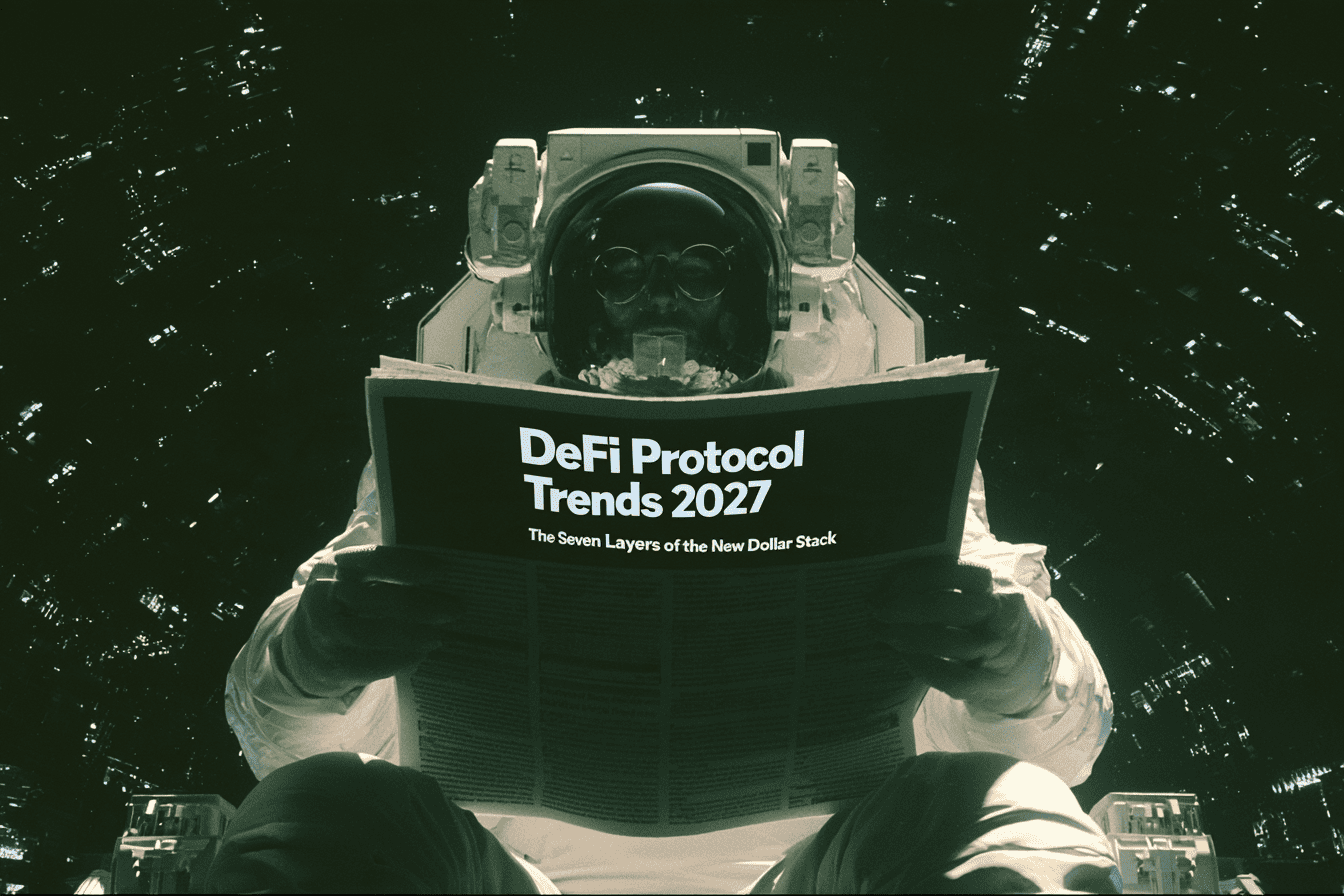
DeFi Protocol Trends 2027: The Seven Layers of the New Dollar Stack
DeFi protocols stopped being governance tokens and became businesses with revenue, while the stack broke into specialised layers. A layer-by-layer analysis of Sky, Aave, Frax, Ethena, M0, Perena and Axal heading into 2027.

Blockchain in Energy: Which Use Cases Are Real, and Which Are Hype
Blockchain energy use cases in 2026, sorted by maturity: proven in REC and carbon credit tokenization, still early for P2P trading and grid settlement.
Build Your Commodity Tokenization Platform with SpaceDev
Tokenizing physical commodities is an operations problem as much as a blockchain one. We build the platforms that keep vaults, warehouses, and on-chain supply in sync, so your tokens are worth exactly what they claim to be.